
Why Hot Water Slab Lines Fail Prematurely in Florida Homes
Among all foundation plumbing breaches, failures on pressurized hot water lines occur with significantly higher frequency than cold water lines. Homeowners needing hot water slab leak repair Boca Raton services usually discover the problem after stepping barefoot onto uncharacteristically hot floor tiles or noticing their water heater burner firing continuously. When a hot water line leak under slab Boca Raton property occurs, hundreds of gallons of heated municipal water seep beneath the concrete foundation daily.
The primary reason hot water lines fail first relates directly to physics and metallurgy: thermal expansion and contraction. Unlike cold lines that stay at relatively stable ground temperatures, hot lines cycle through dramatic temperature variations whenever a shower runs, a dishwasher cycles, or laundry is washed. Copper tubing expands significantly when heated to 125 degrees Fahrenheit, lengthening and shifting against surrounding concrete, rocks, and abrasive sand. Over decades, this microscopic cyclic rubbing wears away the outer copper wall until a high-velocity pinhole breach develops.
Noticing Warm Spots on Your Floors?
Hot water foundation leaks demand fast attention to prevent foundation erosion.
Key Warning Signs of a Hot-Side Foundation Leak
Because escaping hot water generates noticeable physical heat and triggers continuous water heating appliance activity, detecting a hot line failure is often possible before moisture breaches flooring surfaces:
- Noticeable Warm Spot on Floor Boca Raton: Stepping on a specific zone in your hallway, kitchen, bathroom, or bedroom reveals a warm spot on floor Boca Raton residents frequently notice. In severe cases, tile flooring feels hot to the touch.
- Water Heater Running Constantly Boca Raton: If you notice your gas water heater burner firing non-stop or hear the hum of an electric heating element operating 24 hours a day without anyone using hot water, your system is actively dumping heated water underground.
- Depleted Hot Water Capacity: Showers turn lukewarm much faster than normal because heated water is steadily siphoned away through the foundation breach, forcing the tank to replenish constantly with cold inlet water.
- Escalating Electric or Natural Gas Bills: Because your water heating appliance works non-stop against heat loss, utility energy consumption spikes dramatically alongside municipal water meter increases.
- Warping Wood or Loosened Tile Grout: Continuous thermal moisture rising through the concrete slab degrades carpet glue, cracks porcelain tile grout, and buckles engineered hardwood floors.
Advanced Thermal Imaging Diagnostics
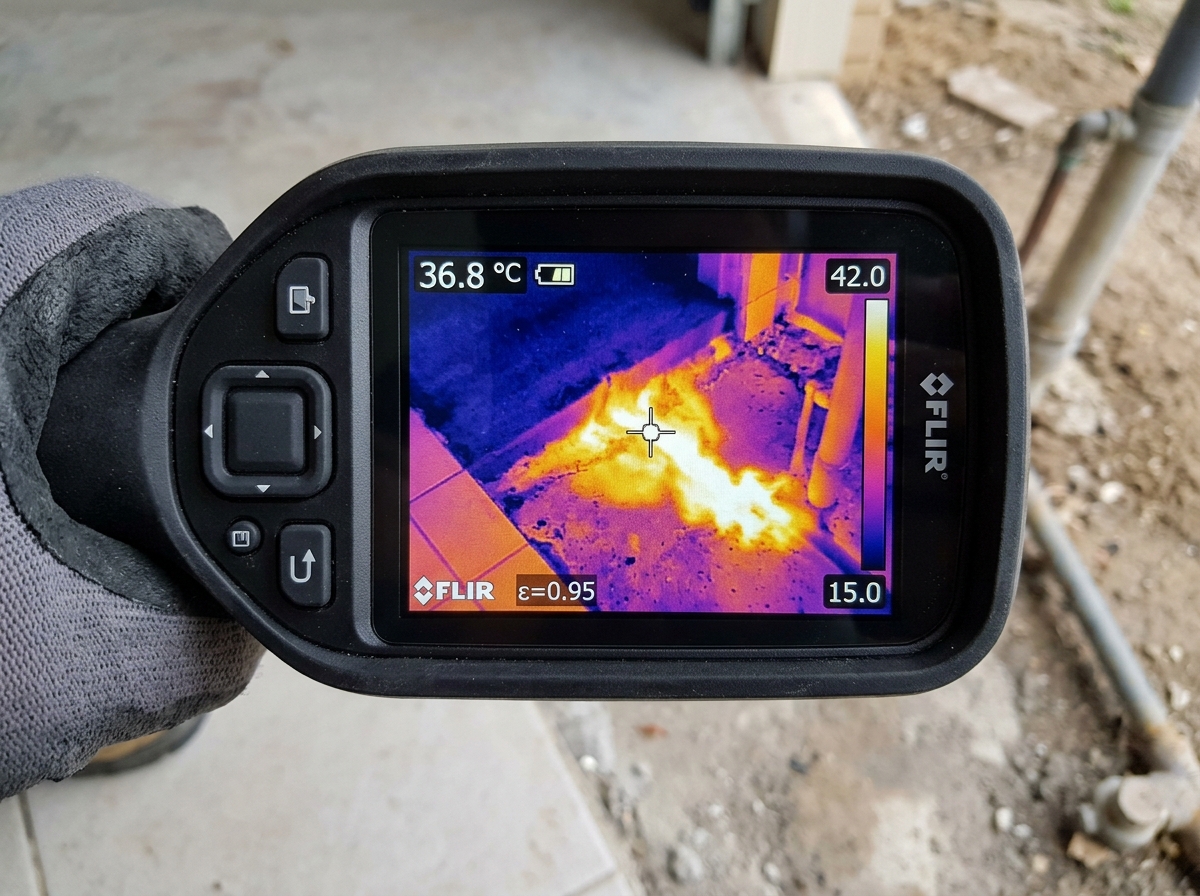
Locating a hot water leak beneath concrete foundations provides a distinct technical advantage: heat transfer. In our slab leak detection protocols, high-resolution infrared thermographic cameras capture the surface radiation emitted by the concrete. As escaping 120-degree water spreads through sub-slab aggregate and sand, it heats the concrete slab from below.
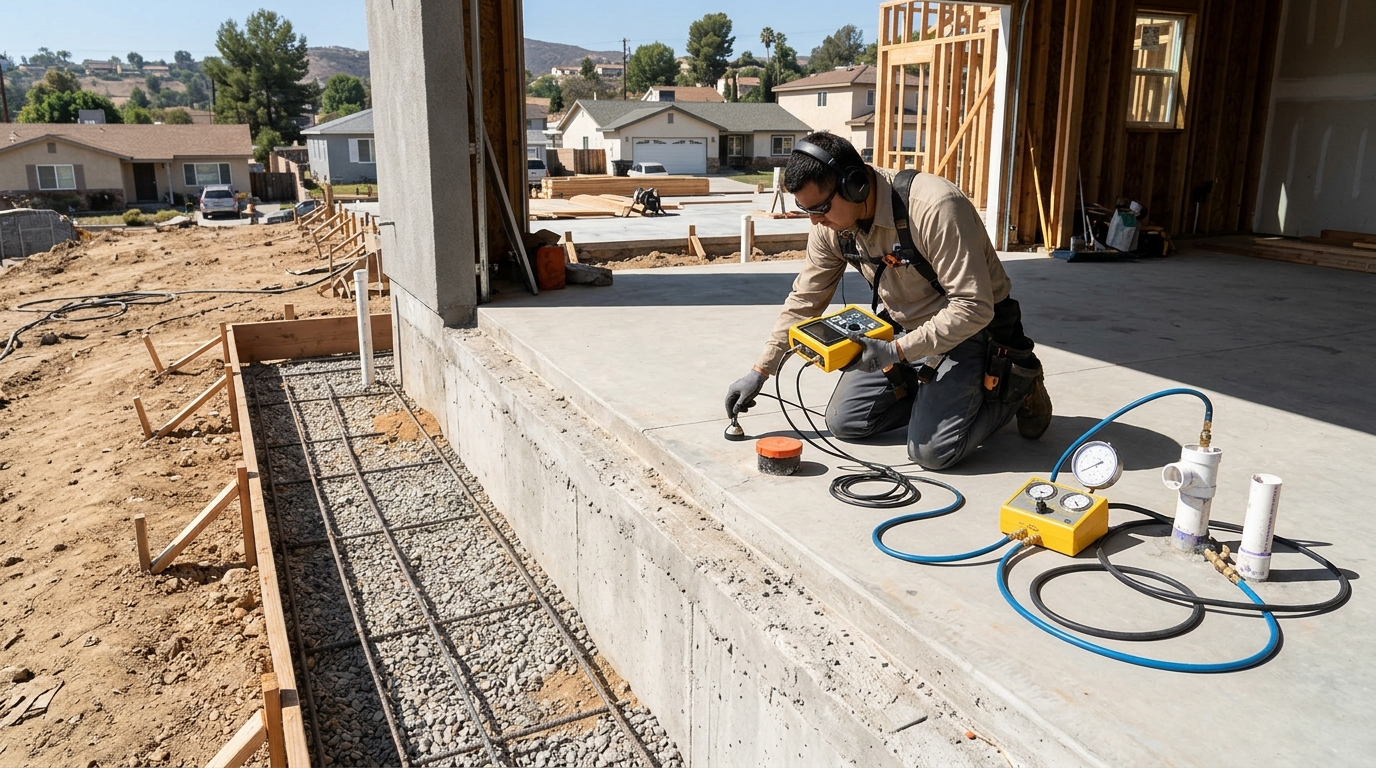
Through our calibrated thermal imaging cameras, this subsurface dispersion appears as a vivid glowing bloom or heat mushroom directly centered over the breach. Combined with electronic acoustic ground microphones that capture the distinct hiss of escaping pressurized water, technicians can isolate the exact coordinates of the pinhole within inches, avoiding exploratory demolition across your living room or kitchen.
Repair vs. Reroute: Choosing the Safest Long-Term Solution
When resolving a hot water slab leak in Palm Beach County, homeowners generally evaluate two primary restoration strategies:
Option A: Direct In-Slab Spot Repair
Direct spot repair involves using a concrete saw and jackhammer to open an access pocket directly above the verified leak coordinates. Once the pipe is cleared of sand and gravel, a certified plumber cuts away the corroded copper segment and solders or brazes a new commercial-grade copper replacement with protective sleeving. While this method fixes the immediate hole, it leaves the rest of the aging hot water line embedded under concrete, where ongoing thermal stress can trigger another pinhole in an adjacent section months later.
Option B: Overhead Hot Line Reroute (Recommended)
The superior and most permanent solution for hot-side leaks is an overhead slab leak reroute. Rather than demolishing fine flooring, plumbers cap and permanently abandon the leaking hot line beneath the foundation. A new flexible cross-linked polyethylene (PEX-a) line is run from the water heater through interior walls and ceiling/attic cavities directly to the affected fixtures.
PEX-a tubing offers dramatic advantages over copper for hot water applications: it is completely immune to pitting corrosion, damp soil minerals, and acidic water, and its elasticity accommodates thermal expansion without friction wear. Furthermore, modern reroutes include heavy foam pipe insulation in attic runs to maintain hot water temperatures throughout the home.
Stop Wasting Heated Water and Energy
Call our Boca Raton foundation specialists to schedule non-destructive hot line diagnostics.
Immediate Safety Protocols for Homeowners
If you confirm a hot floor or suspect an active hot water slab breach, follow these protective steps immediately:
- Shut Off the Water Heater Cold Inlet Valve: Turn the shutoff valve located directly above your water heater tank clockwise. This cuts water pressure to the entire hot water network while preserving cold water service to your toilets, faucets, and kitchen.
- De-energize the Water Heater: Flip the dual-pole 30-amp circuit breaker for an electric water heater to OFF. For gas units, rotate the control dial to VACATION or OFF. Operating a water heater with reduced pressure or compromised internal tank levels can burn out internal electric heating elements or damage burner assemblies.
- Capture Date-Stamped Photos: Photograph the warm floor area, moisture meter readings if available, and utility meters for potential homeowners insurance documentation.
Frequently Asked Questions About Hot Water Slab Leaks
Can I just turn off my hot water heater and wait?
Shutting off the water heater inlet valve temporarily stops water loss from the hot line, which protects your foundation soil from erosion until our repair team completes the bypass.
Why did the hot water line fail before the cold water line?
Hot water lines expand and contract every time hot water runs, causing continuous friction against surrounding concrete and abrasive soil. Cold lines stay at stable temperatures and undergo far less movement.
Does a hot water reroute take a long time?
Most single-loop hot water overhead reroutes are completed within a single business day, fully restoring hot water service while avoiding messy floor demolition.
Discover our comprehensive slab leak repair Boca Raton solutions, explore whole-home upgrades with our repiping services, or review our local Boca Raton coverage areas.